Explore our industrial-grade processing units, high-speed Fibre Channel interface controllers, and enterprise-level RAID storage modules.
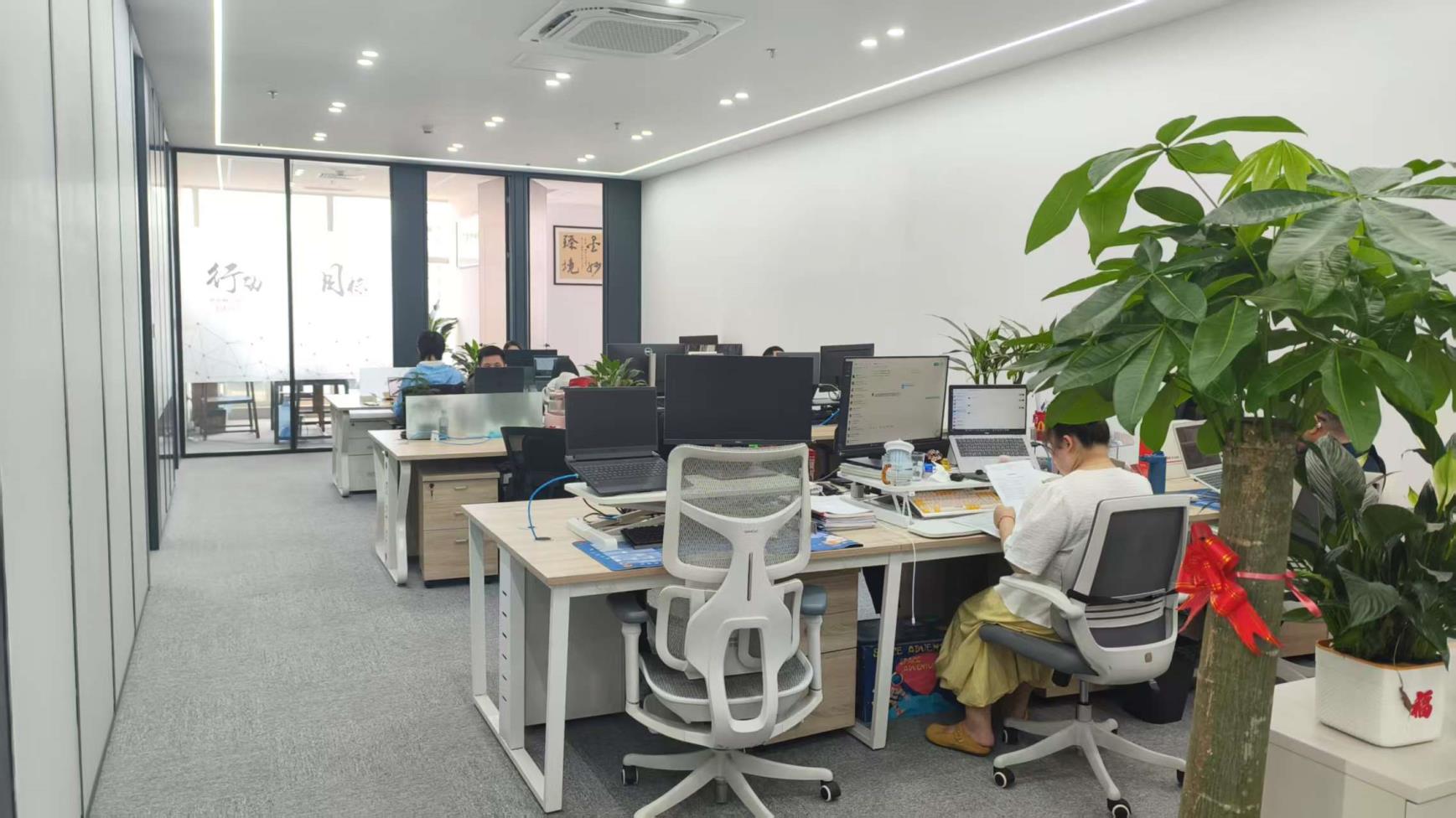
Established in the global hardware epicentre in late 2024, Shenzhen Tiansheng Cloud Technology Co., Ltd. stands as a premier enterprise-grade verified hardware supplier on Alibaba.com. Collaborated and audited by world-class assurance firm Intertek, we specialize in high-performance computing components, cloud infrastructure architectures, and GPU-accelerated computing nodes.
Our operational profile centers on distributing enterprise servers like Dell PowerEdge (e.g., R750, R740, R760 generations) and FusionServer (xFusion) architectures. Rather than just offering off-the-shelf modules, we specialize in "light customization." Our engineering staff optimizes and validates memory arrays, storage expansion configurations, custom ASIC boards, and advanced networking interfaces to address specialized AI development workloads.
Decoding the structural, logistical, and technical capabilities of Shenzhen's hardware clusters.
Shenzhen provides an all-inclusive component ecosystem where raw silicon, PCB design bureaus, surface-mount technology (SMT) factories, and structural testing labs operate within a 10-kilometer radius. This geographic concentration reduces assembly turnaround cycles by up to 60% compared to Western facilities.
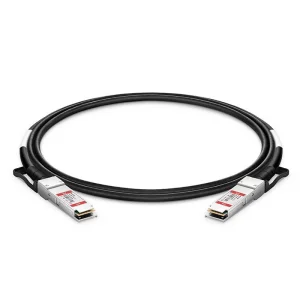
Chinese factories excel in adaptive configuration engineering. We provide tailor-made metal bracket stamping, custom length high-speed copper DAC cabling (like the QSFP-40G-CU3M), firmware modifications for OEM controller cards (e.g., LSI 9560 series), and custom server rack layout design.
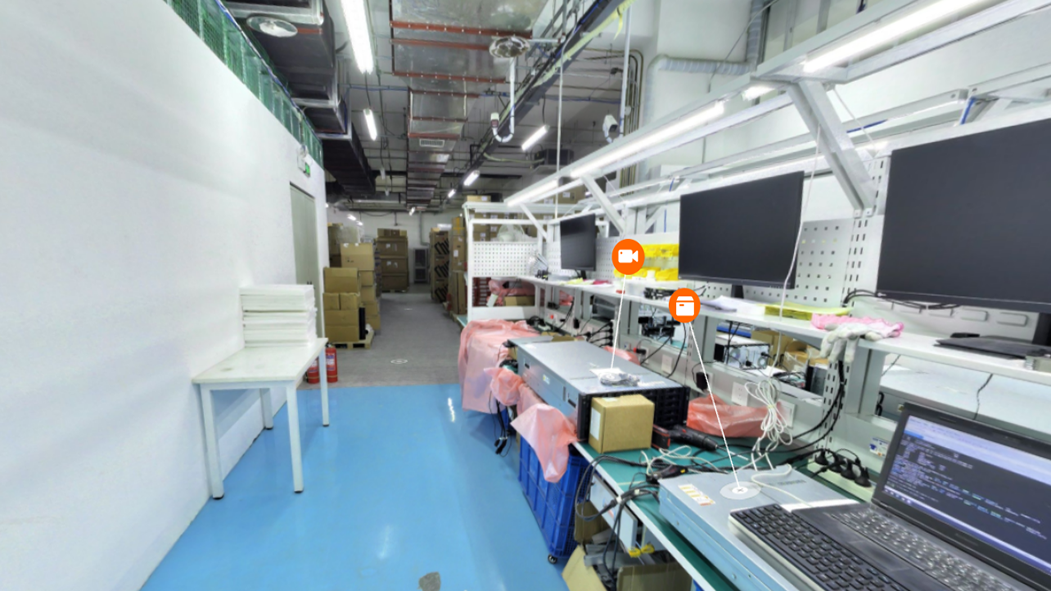
Integrating tier-1 server hardware requires absolute system reliability. Our production runs incorporate hardware loop testing (HIL), environmental chamber stress-tests, and real-system diagnostic validation on Dell PowerEdge and FusionServer blades to ensure zero-out-of-box component failure rates.
The convergence of advanced manufacturing technology and dense component networks in China allows suppliers to deliver enterprise-grade performance at highly optimized price-to-performance metrics. For international procurement managers, this represents a pathway to achieve high performance while maintaining cost efficiency. By partnering with local distribution hubs like Nexa Technology, organizations bypass middleman markups and purchase directly from the primary tier of global system components.
Understanding the technological transformation shaping future datacenter deployments.
Datacenters are moving away from legacy SATA protocols toward ultra-high-speed PCIe and NVMe standards. Components like the EP600 Series NVMe SSD enable low-latency operations by utilizing multiple PCIe lanes directly linked to the central processing unit, bypassing legacy SAS/SATA host bus adapter (HBA) translation layers. This results in an exponential increase in Random IOPS (Input/Output Operations Per Second) and significantly reduced read-write latency.
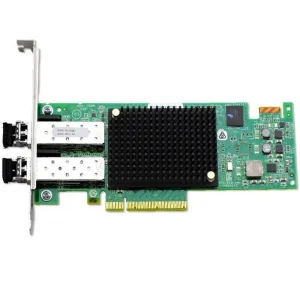
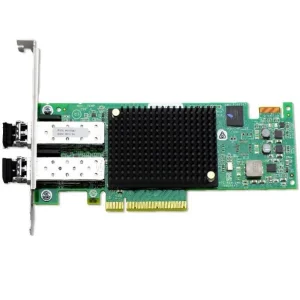
For large storage area networks (SAN), high-density data pipelines rely on fiber-optic links. Hardware like the Emulex LPe35002-M2 Dual Port 32GB FC32 HBA Card utilizes short-wave LC SFP28+ transceivers to transmit data at a rate of 32 Gigabits per second per port. These systems prevent throughput bottlenecks during bulk VM migrations and high-performance file sharing.
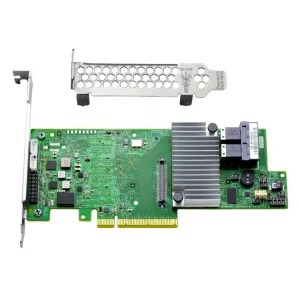
As capacity demands scale to tens of terabytes per array, data integrity relies on intelligent caching controllers. Products like the LSI 9560-16i (SAS3908) feature onboard caches (up to 8GB) and Tri-Mode interfaces, enabling simultaneous communication with SAS, SATA, and NVMe drives. This provides real-time parity calculations, hardware RAID mirroring, and protects against data loss during sudden power disruptions.
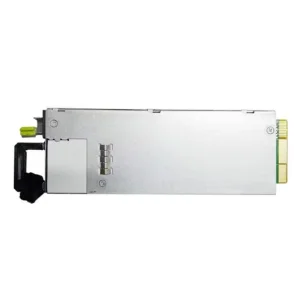
Modern dense computing platforms require high power inputs with minimal thermal dissipation. Integrating server power supplies such as the Platinum 900W/1500W/2000W AC PSU ensures high conversion efficiency (over 94% at typical loads). This efficiency minimizes heat generation inside server racks, lowering datacenter cooling overheads.
When planning high-density server configurations (such as xFusion or Dell PowerEdge AI setups), ensure HBA and RAID cards match the motherboard's PCIe slot generation to prevent bus downshifting. When mixing storage media, separate high-speed NVMe drives into caching tiers while using larger SATA/SAS HDDs for capacity-oriented cold storage pools.
Tailored server accessory configurations designed for enterprise workloads.
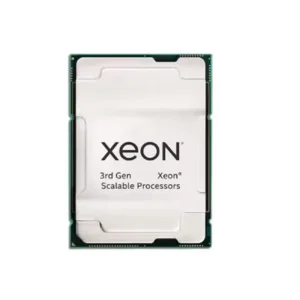
For model training and inference pipelines, servers require high-power processors (such as the multi-core Xeon 4309Y/4316 family) matched with 2000W Platinum redundant power supplies to support multiple NVIDIA GPU accelerator cards without power throttling.
High-density virtual machine environments require high storage bandwidth. Installing Emulex 32Gb/s SFP28 HBA Cards enables storage networking with low latency, reducing I/O wait times across virtualized business systems.
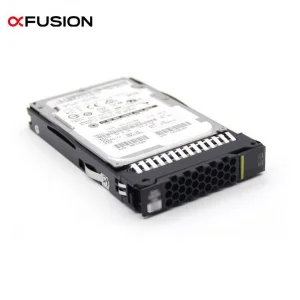
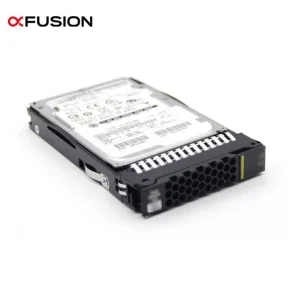
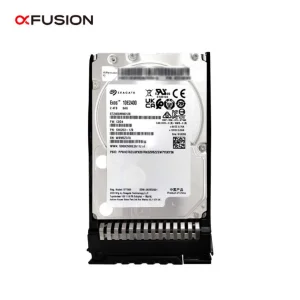
For massive scale-out storage arrays, standard configurations use 12Gb/s SAS NL Hard Drives (available up to 12TB/20TB) housed in hot-swap trays, paired with LSI 9560-16i controllers to balance raw storage capacity with active hardware fault-tolerance.
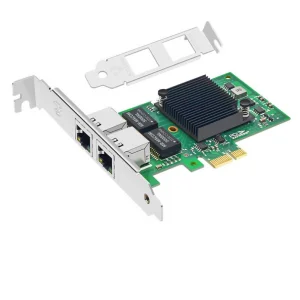
Integrate our certified processors, redundant power supplies, high-capacity hard drives, and ultra-high-speed network cables into your infrastructure.
How Nexa Technology manages international supply lines, verified quality certifications, and custom configurations.
Global companies require high quality, structural reliability, and long-term compatibility. Our procurement pathways adhere to strict E-E-A-T (Experience, Expertise, Authoritativeness, Trustworthiness) parameters:
We configure servers according to customer specifications. Whether adjusting multi-terabyte arrays for database servers or provisioning high-speed DAC cabling for custom server rack designs, our engineering team ensures that every piece of hardware is built to perform in enterprise environments.
We verify the authenticity of all components (such as Dell PowerEdge and FusionServer modules) to ensure compatibility. Our technicians perform hardware-level tests using specialized diagnostic tools to check:
Expert answers to common engineering and purchasing questions.
The SAS3908 is a dual-core ROC (RAID on Chip) design featuring an integrated high-speed cache (up to 8GB) and Tri-Mode connectivity. It is suitable for configurations requiring hardware RAID 5, 6, 50, and 60, where write performance is optimized via parity calculations. The SAS3808 is a cost-effective I/O controller or entry-level ROC best suited for simple drive layouts (RAID 0, 1, 10, or JBOD boot setups) that do not require cache protection.
Our engineers test components with specific OEM BIOS and UEFI configurations. We cross-verify controller cards and drive firmware versions to match OEM vendor signatures. This prevents system errors and diagnostic warnings during boot cycles on platforms like xFusion FusionServer and Dell PowerEdge.
Every server component undergoes structural and diagnostic inspections. Enterprise-class hard drives are checked for bad sectors and write cycles, while Host Bus Adapters (HBAs) and RAM modules undergo thermal cycle tests. We provide customers with detailed test reports before final packaging and shipping.
32Gb/s SFP28 Fibre Channel (FC) HBAs double the data rate compared to legacy 16Gb/s setups. This throughput optimization reduces operational bottlenecks in virtualized databases, supports higher VM densities, and lowers power consumption per gigabit transferred.
Platinum-certified power supplies (such as the 900W/1500W/2000W AC models) provide active power factor correction (PFC) and over-current, over-voltage, and short-circuit protections. Their redundancy configurations enable seamless hot-swapping during power source failures, ensuring uninterrupted operations.
We provide configuration services, matching servers with high-density GPU accelerators, extra memory capacity, and NVMe SSD arrays. Additionally, we integrate PCIe switches and high-speed network connections to optimize hardware throughput for AI workloads.
 Nexa AI Server