Premium server infrastructure driving the transition towards hybrid classical-quantum and high-density deep learning workflows.
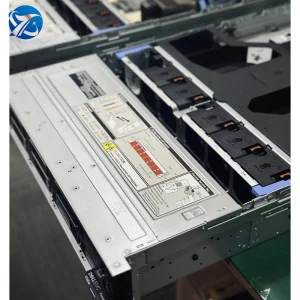
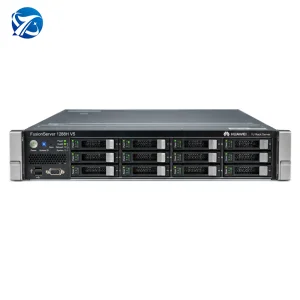
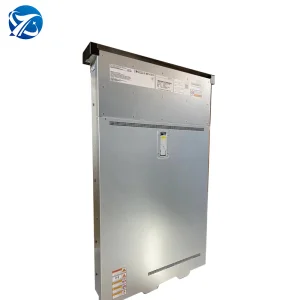
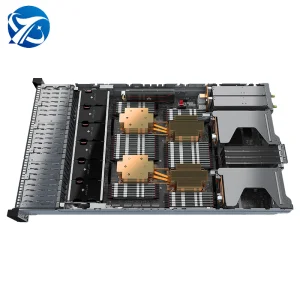
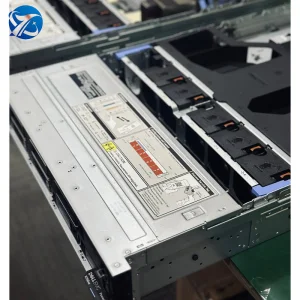
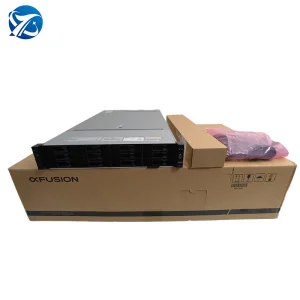
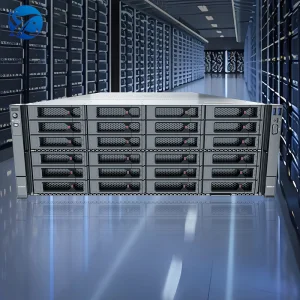
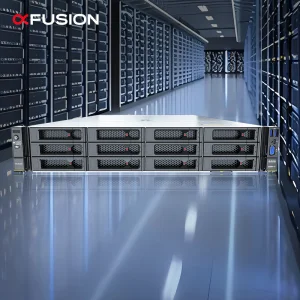
As global data demands escalate exponentially, the boundaries of classical silicon-based microprocessors are being pushed to their thermodynamic limits. Quantum Computing (QC) represents a fundamental paradigm shift. Rather than replacing classical compute pipelines, the modern enterprise framework relies on Hybrid Classical-Quantum Architectures. High-performance classical rack servers (incorporating advanced GPU configurations and high-speed NVMe data paths) serve as the indispensable "classical control plane" that interacts with Quantum Processing Units (QPUs).
In this industrial transition, leading organizations do not simply deploy quantum circuits in isolation. Real-world applications—ranging from DeepSeek AI optimization modeling to real-time molecular modeling—require intense pre-processing and post-processing of quantum states. This process relies heavily on robust 2U and 4U enterprise server platforms, configured with massive memory pools and hardware RAID arrays, to act as the error-correcting, low-latency API host nodes that communicate directly with quantum cloud environments.
Key indicators representing the transition from Noisy Intermediate-Scale Quantum (NISQ) devices to Fault-Tolerant Quantum Computing (FTQC).
Physical Qubits Surpassed
2-Qubit Gate Fidelity
YoY Enterprise Adaption Rate
Control Plane Standards
Analyzing the core technological methodologies, hardware architectures, and integration pathways of the market's primary developers.
Architecture: Dilution-refrigeration based superconducting transmon qubits.
Analysis: Operating on the Eagle, Osprey, and Condor processors, IBM leads in software-hardware integration with Qiskit. IBM utilizes massive liquid-helium cooling to preserve coherence times.
Architecture: Superconducting Josephson-junction qubits.
Analysis: Known for pioneering "Quantum Supremacy" demonstrations. Google focuses on Quantum Error Correction (QEC) strategies, fabricating high-density planar architecture that requires high-performance classical arrays for algorithmic compiling.
Architecture: Ytterbium ions suspended in electromagnetic fields.
Analysis: Renowned for having exceptionally high gate fidelities (exceeding 99.9%). Quantinuum uses the H1 and H2 systems, offering a distinct advantage in coherence duration and deep-depth quantum calculations.
Architecture: Barium and Ytterbium trapped-ion arrays.
Analysis: Provides standard cloud-based quantum computing interfaces. IonQ's Forte system relies on software-reconfigurable architectures, allowing users to dynamically modify connectivity paths between physical qubits.
Architecture: Multi-chip superconducting QPU designs.
Analysis: Focuses on low-latency hybrid computing. Their Ankaa-class system interfaces tightly with traditional classical coprocessors, utilizing high-speed hardware control boards that interface directly via PCIe protocols.
Architecture: Silicon photonics manipulating single photons.
Analysis: Manufacturing a fault-tolerant system via standard semiconductor foundries. Utilizing light rather than superconducting junctions eliminates the need for sub-Kelvin cooling systems, facilitating rapid upscaling.
Architecture: Continuous-variable photonic hardware.
Analysis: Notable for developing PennyLane, the open-source software stack that integrates quantum machine learning with classical frameworks like PyTorch and TensorFlow, bridging the gap between GPU and QPU resources.
Architecture: Spin qubits in silicon quantum dots.
Analysis: Leveraging existing CMOS manufacturing processes. Intel's Tunnel Falls chip utilizes standard wafer production lines, facilitating integration with classical logic on a single die.
Architecture: Superconducting quantum annealing chips.
Analysis: Specialized in solving complex optimization problems (e.g., logistics, portfolio optimization). While not a gate-based universal quantum computer, it provides immediate commercial utility via the Advantage processor line.
Architecture: Rubidium atoms trapped in optical tweezers.
Analysis: Operating at room temperature inside vacuum chambers. Pasqal uses laser arrays to manipulate atoms, achieving highly configurable spatial 2D and 3D register layouts ideal for physical simulation.
Why modern enterprise clusters require reliable Dell PowerEdge and FusionServer architectures to execute hybrid computations.
Quantum computing relies heavily on classical hardware. A QPU requires a high-performance classical server host to perform error mitigation, translate high-level code (like Cirq or Qiskit) into analog microwave pulses, and manage the massive datasets used in quantum machine learning (QML).
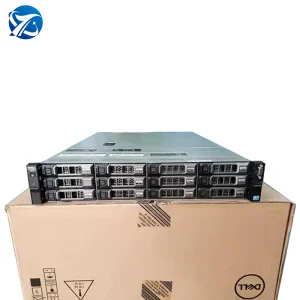
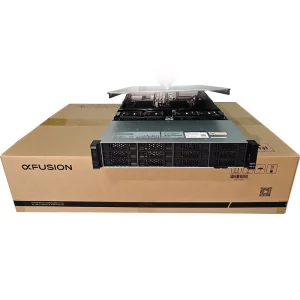
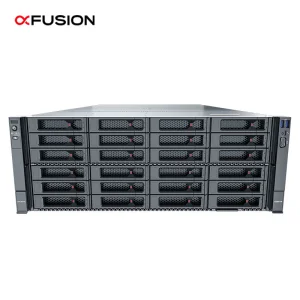
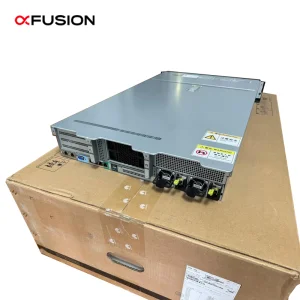
For example, xFusion 2288H V7 and Dell PowerEdge R760 platforms configured with PCIe Gen 4.0 Tri-Mode RAID cards (like the LSI 9560-8i) act as the storage buffer. They feed raw matrix inputs to GPU-accelerated computing nodes (e.g., FusionServer G5500 V7) before routing sub-processes to quantum co-processors.
Dell PowerEdge & FusionServer systems partition datasets, run pre-processing algorithms (e.g., DeepSeek models), and queue requests.
FPGA cards in classical nodes translate digital commands into microwave pulses targeted at the cryostat chamber.
The QPU executes gate sequences, collapses wavefunctions, and outputs analog state data back to classical amplifiers.
Translating quantum algorithms into physical applications within enterprise data centers.
Classical hardware struggle to simulate molecules with more than 40-50 electrons. Quantum computing allows pharmaceutical research centers to model chemical reactions directly in the QPU register, accelerating drug discovery pipelines from years to days.
D-Wave and Pasqal architectures solve optimization problems like vehicle routing, global supply chain tracking, and portfolio risk management by mapping variables to physical spin systems and finding minimum-energy states.
Training models like DeepSeek requires massive computing power. Hybrid architectures combine GPU nodes (such as the 8U GPU G8600 V7) with quantum algorithms to optimize neural network weights, lowering both energy requirements and training times.
The evolution milestones towards fault-tolerant systems and classical co-processing.
Deploying hybrid AI-Quantum architectures using GPU-based nodes (like xFusion G8600 V7 and Dell R760) for quantum machine learning (QML) and optimization tasks, while using classical hardware for error mitigation.
Scaling physical qubit counts to over 10,000, enabling the creation of "Logical Qubits" that remain stable even if individual physical components fail. This requires high-performance, low-latency classical hardware controllers.
The arrival of fault-tolerant systems capable of running Shor's and Grover's algorithms at scale, prompting global organizations to transition to post-quantum cryptography (PQC) protected by verified infrastructure.
Addressing core concerns about quantum migration, hardware requirements, and classical systems integration.
No. Quantum computers operate as co-processors for specific calculations. General computing tasks, database management, high-performance web routing, and raw model training like DeepSeek will remain on classical CPU and GPU servers, such as the Dell PowerEdge and FusionServer architectures.
During large hybrid simulations, quantum state preparation generates huge datasets. High-speed RAID controllers (such as the 9560-8i PCIe Gen 4.0 card) protect these datasets from disk errors, ensuring continuous operations for hybrid classical-quantum models.
Before running algorithms on physical quantum hardware, organizations test and debug them on classical servers. Modern GPU servers (like the xFusion G8600 V7) simulate quantum environments, allowing developers to test code before deploying to a physical QPU.
As quantum computers become more powerful, standard encryption algorithms (such as RSA) will become vulnerable. Migrating to PQC requires upgrading to modern, secure processors (like Xeon Scalable or modern AMD EPYC platforms) to support the increased computational overhead of these new security standards.
Reliable hardware sourcing, system configuration, and logistics support for enterprise infrastructure globally.
Shenzhen Tiansheng Cloud Technology Co., Ltd. is a verified enterprise hardware distributor on Alibaba.com. Founded in late 2024, the company supplies high-performance rack servers, GPUs, and network hardware to a global client base, including wholesalers, system builders, and IT departments.
| Audited Status | Verified by Intertek (Trade Assurance Enabled) |
| Core Portfolio | Dell PowerEdge (R750, R760, R660xs), FusionServer (xFusion) |
| Customization | Light customization (custom CPU, RAM, GPU, & storage configuration) |
| Target Markets | Eastern Europe, Southeast Asia, Middle East |
| Customer Service | Average response time < 3 hours |
| Languages | English, Spanish, Russian, French, Portuguese |
Shenzhen Tiansheng Cloud Technology Co., Ltd. configures enterprise-grade hardware to meet specific user demands. Their systems undergo rigorous testing to ensure reliability under heavy computing workloads.
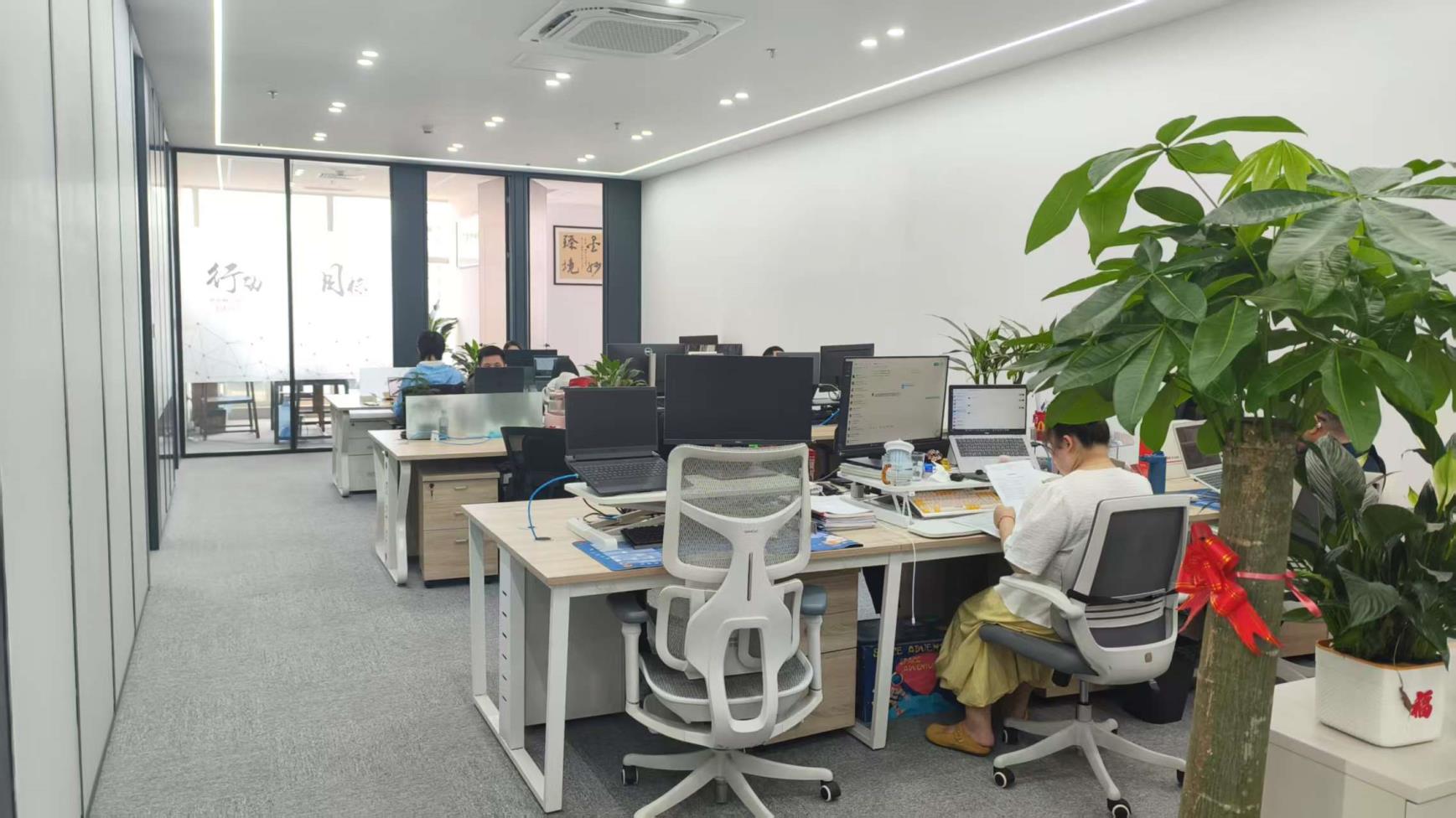
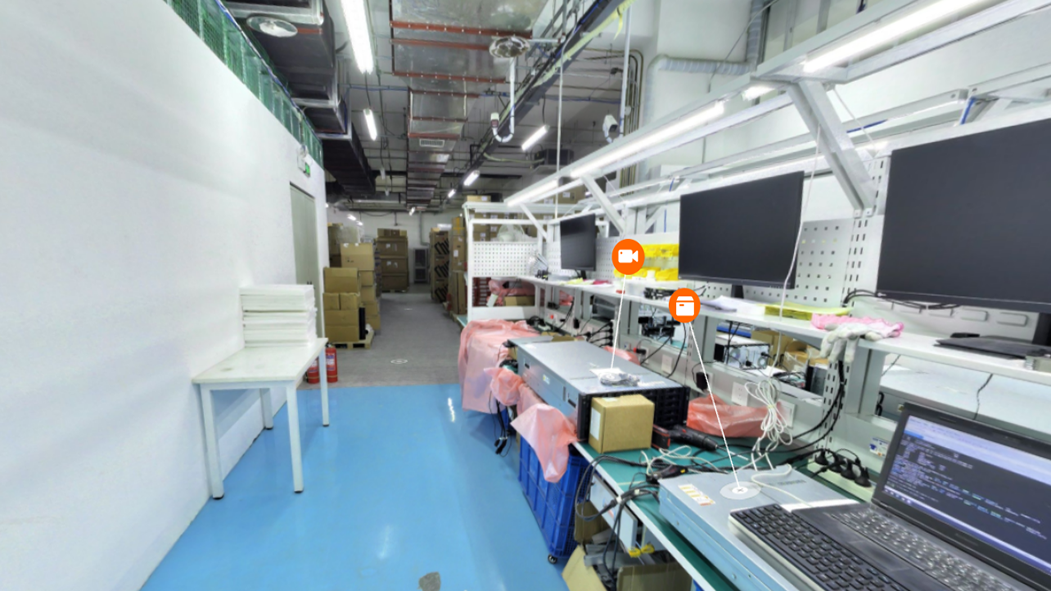
High-density platforms, specialized AI accelerators, and high-performance controllers for hybrid clusters.
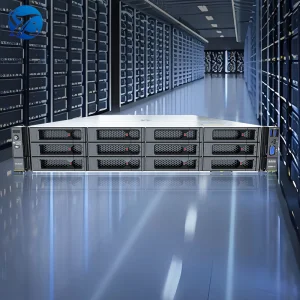
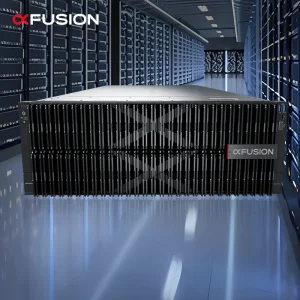
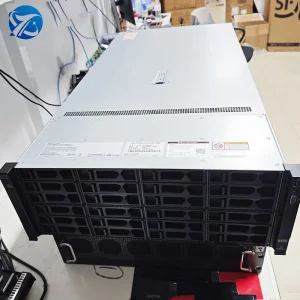
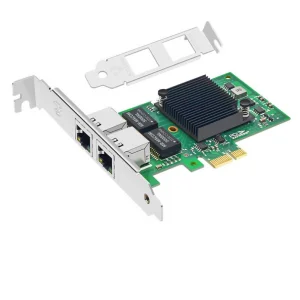
 Nexa AI Server