Choosing the right nvidia gpu server manufacturer can determine whether an AI project scales smoothly or stalls under practical pressure. A server is not merely a box filled with GPUs. It is a working system involving cooling, power delivery, networking, storage, firmware, and technical support.
Jensen Huang, NVIDIA’s founder and CEO, has said, “AI is the most powerful technology force of our time.” That statement explains why GPU infrastructure deserves careful evaluation. A reliable manufacturer should understand NVIDIA GPU compatibility, CUDA-based workloads, PCIe or NVLink requirements, and the thermal demands of sustained training. These details become visible in real operations. Fans may run continuously. Rack temperatures may rise quickly. A poorly matched power design can limit performance before the GPU reaches full capacity.
An experienced nvidia gpu server manufacturer should provide more than impressive specifications. It should offer validated configurations, transparent component lists, burn-in testing, and responsive after-sales service. Ask about warranty coverage, replacement procedures, remote management, and delivery experience. Small details matter. A loose airflow plan can create expensive problems.
Still, no supplier is perfect. Marketing claims can sound stronger than measured results. Independent testing is essential. Buyers should compare workload benchmarks, power consumption, deployment records, and support response times. The best choice is not always the cheapest system or the newest GPU. It is the manufacturer that can explain trade-offs clearly, document its process, and support the server after installation. That standard builds trust, even when the project requirements change later.
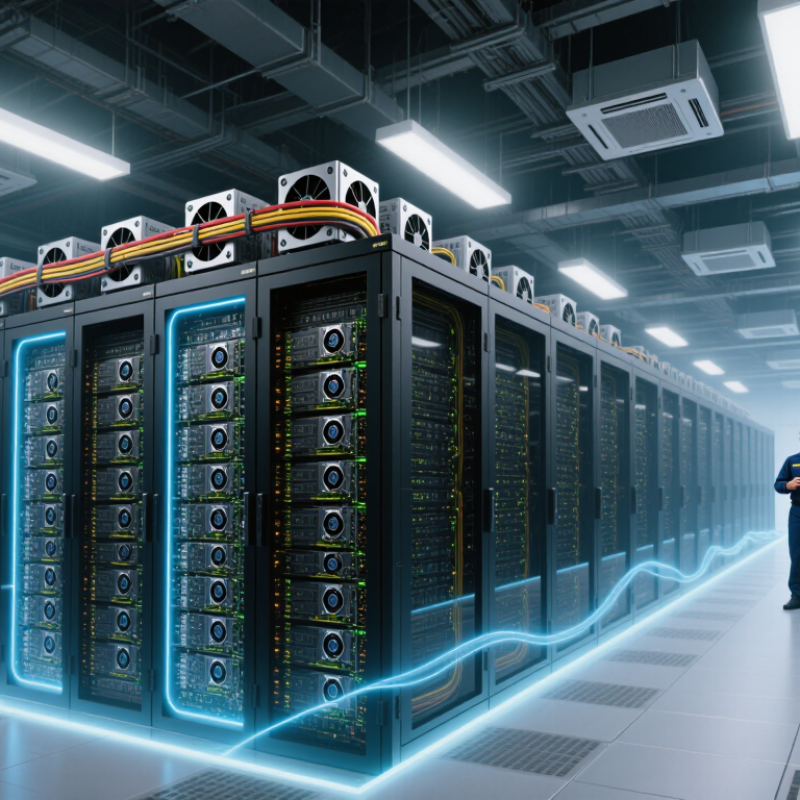
Choosing a specialized GPU server manufacturer means buying more than a chassis. It means gaining practical design experience. Manufacturers provide validated combinations of accelerators, processors, memory, storage, networking, and power supplies. They tune airflow for dense racks. They also support firmware, driver compatibility, rack integration, and burn-in testing. That matters. Stanford University’s 2024 AI Index Report recorded 25.2 billion dollars in global private generative AI investment during 2023. Such spending increases pressure for dependable computing infrastructure.
A capable manufacturer also provides workload sizing before shipment. Training, inference, simulation, and visualization need different memory and interconnect designs. Engineers can estimate heat output, power demand, and expansion limits. The IEA’s Electricity 2024 report estimated that data centers consumed about 460 terawatt-hours globally in 2022. It projects consumption could exceed 1,000 terawatt-hours by 2026. Practical suppliers therefore discuss power capping, liquid cooling, remote monitoring, and rack-level efficiency. Small details matter. A poorly planned cable path can complicate maintenance.
In practice, the first configuration is rarely perfect. A server may pass laboratory tests but behave differently in a crowded facility. Reliable manufacturers provide documented validation results, failure-replacement procedures, spare-part planning, and clear service-level terms. They should explain limitations instead of promising unlimited performance. I would also request measured noise, thermal, and power data under realistic workloads. No deployment is perfect. Honest technical review remains essential.
| Service or Capability | Typical Specification or Deliverable | Practical Value | Why It Matters |
|---|---|---|---|
| GPU Platform Integration | Single-GPU, multi-GPU, PCIe, and high-bandwidth interconnect server designs | Supports AI training, inference, scientific computing, and visualization workloads | A manufacturer can match the server architecture to the workload instead of relying on a general-purpose configuration. |
| GPU Capacity Planning | Common configurations range from 1 to 8 data-center GPUs per server, depending on chassis and power limits | Allows capacity to scale from departmental workloads to distributed computing clusters | Correct GPU density helps balance performance, rack space, power consumption, and budget. |
| CPU and Memory Matching | Server-class CPUs with expandable system memory, often from hundreds of gigabytes to multiple terabytes | Reduces CPU bottlenecks and supports large datasets, preprocessing, and virtualization | GPU performance depends on sufficient host memory, CPU throughput, and data-feeding capacity. |
| Storage Configuration | NVMe solid-state storage for active datasets, with optional high-capacity storage for archives | Improves dataset loading, checkpointing, and application response times | Fast storage helps prevent GPUs from waiting for training data or model checkpoints. |
| High-Speed Networking | Ethernet or specialized low-latency networking, commonly from 25 Gb/s upward for cluster deployments | Enables distributed training, shared storage access, and inter-server communication | Network performance becomes critical when workloads span multiple GPU servers. |
| Power and Cooling Design | Redundant power supplies, airflow planning, and air- or liquid-cooling options based on GPU thermal design | Maintains stable operation under sustained computational loads | GPU servers can consume substantially more power than standard CPU servers, making thermal planning essential. |
| Hardware Validation | Compatibility checks for GPUs, CPUs, memory, firmware, storage, power supplies, and operating systems | Reduces integration errors before shipment or deployment | Pre-validated components generally shorten troubleshooting and deployment time. |
| Software and Driver Readiness | Operating-system installation, GPU drivers, container support, monitoring tools, and cluster software options | Provides a more usable system immediately after installation | Correct software versions are necessary for application compatibility and GPU acceleration. |
| Benchmarking and Acceptance Testing | Stress testing, GPU diagnostics, thermal testing, memory checks, and workload-specific benchmarking | Confirms stability and verifies that the delivered configuration meets its design targets | Testing provides measurable evidence before the server enters production. |
| Customization | Adjustable GPU quantity, memory size, storage layout, network adapters, rack format, and warranty coverage | Aligns the system with application requirements and data-center constraints | Customization avoids paying for unsuitable components or replacing the system prematurely. |
| Deployment and Lifecycle Support | Rack installation guidance, remote support, spare-part coordination, firmware maintenance, and repair services | Improves uptime and simplifies long-term infrastructure management | A single technical partner can reduce coordination effort across hardware and software issues. |
| Scalability Planning | Cluster expansion plans covering rack space, power budget, networking, storage, and workload scheduling | Makes future expansion more predictable and operationally consistent | Early planning helps prevent power, cooling, and network limitations as GPU demand grows. |
Specifications vary by server platform, GPU model, workload, rack environment, and required service level.
It provides validated combinations of GPUs, processors, memory, storage, networking, and power supplies.
Training, inference, simulation, and rendering require different memory and networking designs.
Dense racks need carefully planned airflow, cooling capacity, and cable paths.
Request measured temperature, noise, power consumption, and workload performance data.
A proof-of-concept unit can reveal practical performance problems.
Compare performance per watt, rack density, cooling requirements, and power redundancy.
Check warranty coverage, firmware support, spare-part availability, and failure-replacement procedures.
Not always. Laboratory results may differ inside a crowded facility.
Choosing an nvidia gpu server manufacturer can help organizations build reliable, scalable, and purpose-driven computing infrastructure for artificial intelligence, machine learning, scientific research, and data-intensive applications. A specialized manufacturer typically provides GPU servers, system integration, hardware customization, thermal management, power planning, firmware configuration, testing, and technical support. These systems are designed by carefully matching GPU capacity with processors, memory, storage, networking, chassis design, and workload requirements to achieve balanced performance and dependable operation.
When comparing manufacturers, buyers should evaluate product quality, configuration flexibility, cooling efficiency, expandability, delivery capability, warranty coverage, service responsiveness, and experience with demanding computing environments. The right solution should align with current workloads while allowing room for future growth. Organizations should also consider total ownership cost, energy efficiency, deployment conditions, software compatibility, and maintenance requirements. By assessing these factors systematically, they can select an NVIDIA GPU server solution that delivers strong performance, operational stability, and long-term value.

 Nexa AI Server