The question “Top Deep Learning Server Manufacturers Worldwide?” demands more than a familiar brand list. A credible comparison must examine GPU density, accelerator compatibility, memory bandwidth, networking, cooling, software support, and total operating cost. These details decide whether a server performs smoothly or becomes an expensive bottleneck.
Industry data shows why this market matters. IDC’s Worldwide AI and Generative AI Spending Guide projected global AI infrastructure spending at approximately $154 billion in 2024, with strong growth expected through 2028. The report highlights rising demand for accelerated computing, high-speed interconnects, and scalable data-center systems. Gartner also identified AI-optimized servers as a major driver of worldwide server market growth in 2024. Numbers vary between reports. That difference deserves attention.
Real hardware tells another story. A modern deep learning server may contain eight high-end GPUs, terabytes of memory, liquid-cooling loops, and 400-gigabit networking. It can also consume substantial power under sustained training workloads. Therefore, the best deep learning server manufacturer is not always the one offering the fastest benchmark result. Reliability, firmware maturity, delivery capacity, and technical support matter just as much.
Jensen Huang, founder and CEO of NVIDIA, described this shift clearly: “The next industrial revolution has begun.” His statement reflects the broader transition toward accelerated computing. Yet rankings remain imperfect. Vendor specifications are not always comparable, and published benchmarks may use different datasets, software versions, or power limits. This guide evaluates leading manufacturers through an evidence-based lens, combining industry reports, practical deployment factors, and engineering judgment.
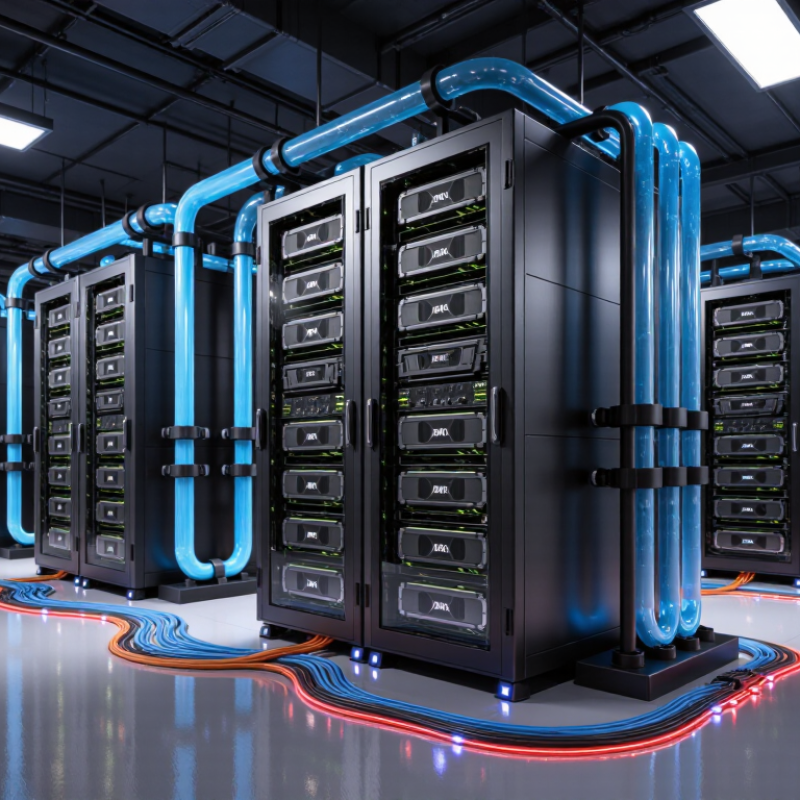
A deep learning server manufacturer does more than assemble CPUs, GPUs, memory, and storage. It engineers a dependable platform for sustained model training and inference. That distinction matters. IDC forecasts global AI infrastructure spending will exceed $150 billion by 2027, increasing pressure on manufacturers to deliver measurable performance, not attractive specifications alone.
A credible manufacturer validates thermal behavior under continuous workloads. It tests power delivery, firmware stability, networking, and accelerator communication before shipment. The International Energy Agency reported that data centers consumed about 460 terawatt-hours of electricity in 2022. It also projects consumption could exceed 1,000 terawatt-hours by 2026. Therefore, efficient cooling and power management are core manufacturing capabilities. A server that finishes training quickly but overheats the room is not truly efficient.
Manufacturers should also publish reproducible benchmark results. Independent training benchmarks, detailed configuration sheets, and failure-rate data help buyers compare systems fairly. Support matters too. Replacement procedures, remote diagnostics, security updates, and spare-part availability can determine whether a cluster remains useful. In practice, advertised throughput often changes after storage, networking, or software limitations appear. That is an uncomfortable reality. Buyers should question perfect numbers and request workload-specific testing. A reliable manufacturer accepts that scrutiny and documents both strengths and constraints.
Deep learning servers now depend on more than raw processor speed. Their core design combines accelerator cards, high-bandwidth memory, fast storage, and low-latency networking.
Mixed-precision computing, especially FP16 and BF16, reduces memory pressure during model training. It can also improve throughput without seriously reducing accuracy. However, careless precision settings may produce unstable results. Testing remains essential.
High-speed interconnects are equally important. They allow several accelerators to exchange large tensors quickly across one server or an entire cluster.
Remote direct memory access can reduce communication overhead during distributed training. PCIe and newer cache-coherent links also improve data movement between processors, memory, and accelerators. Storage systems increasingly use parallel solid-state drives, preventing slow datasets from starving expensive compute resources.
Cooling is becoming a primary engineering issue. The International Energy Agency reported that data centers consumed about 460 terawatt-hours of electricity in 2022. It expects demand could exceed 1,000 terawatt-hours by 2026.
Direct-to-chip liquid cooling can remove heat more efficiently than traditional air systems, particularly in dense racks. The Stanford AI Index 2024 reported that training compute for notable models was doubling roughly every eight months. This trend pressures manufacturers to improve power efficiency, scheduling, and workload monitoring.
Yet performance claims can be misleading without consistent benchmarks. MLPerf-style testing, real customer workloads, and failure-recovery trials provide stronger evidence than peak specifications alone.
No architecture is universally optimal.
Leading deep learning server manufacturers worldwide are judged by more than processor speed. Their strongest systems balance GPU density, memory bandwidth, cooling, power delivery, and service access. In real deployments, a rack may run continuously beside other equipment. Heat management matters. Manufacturers with global engineering teams often offer air-cooled and liquid-cooled platforms, depending on workload and facility limits. They also design servers around accelerator standards, high-speed networking, and redundant power options.
Experienced buyers examine validation records before comparing headline specifications. Useful evidence includes thermal test results, firmware controls, component traceability, and documented repair procedures. A dependable manufacturer should explain how it tests sustained training, multi-node communication, and storage performance. Regional support also matters. Response times, spare-parts locations, and technician coverage can determine whether a research schedule survives a failed fan or cable. Certifications help, but they do not replace clear service commitments.
Deployment details often expose weaknesses. A server may deliver excellent benchmark scores yet struggle in a crowded rack. Noise, cable routing, and upgrade access are easy to overlook. No design is perfect. Buyers should question cooling assumptions, software compatibility, and total operating cost. Some specifications remain difficult to compare across manufacturers, so independent testing is still valuable. Leading manufacturers earn trust through measurable results, honest limits, and support that continues after installation.
Deep learning server manufacturers compare differently when measured beyond processor speed. Independent MLPerf Training v4.1 results show that accelerator clusters can differ sharply in training time and energy efficiency. These tests are useful, but they do not mirror every production workload. A vision model and a language model stress memory, networking, and storage in different ways.
System design is often the real dividing line. IDC’s Worldwide AI and Generative AI Spending Guide projects rapid growth in AI infrastructure investment through 2028. Buyers therefore examine GPU density, high-speed interconnects, and upgrade paths. A practical test includes loading a model, checking eight-hour temperatures, and measuring recovery after a failed node. Small details matter. Cable access matters too.
Cooling and service deserve equal attention. The Green500 rankings demonstrate how much energy efficiency can vary across high-performance systems. Manufacturers using direct liquid cooling may support greater rack density, but facilities need compatible plumbing and trained technicians. Gartner’s 2024 forecast placed worldwide AI spending at about 235 billion dollars, increasing pressure to control operating costs. Still, benchmark leadership can hide maintenance delays, software incompatibility, or limited regional support. My assessment would be incomplete without testing the exact framework, dataset, and network configuration used by the buyer.
Brand-neutral comparison of representative eight-accelerator deep learning server configurations. Aggregate accelerator memory is calculated by multiplying the publicly documented memory capacity of one accelerator by eight. Higher capacity is useful for large language models, foundation models, and distributed training workloads.
Reference basis: publicly available accelerator technical specifications, including 80 GB, 96 GB, 128 GB, and 192 GB memory configurations. The chart compares hardware configuration classes rather than companies or brands; actual server performance also depends on networking, cooling, software optimization, and workload design.
Choosing a deep learning server manufacturer requires more than comparing processor counts. In real deployments, thermal design often decides whether training runs finish overnight. Ask for measured performance under sustained load, not short benchmark bursts. A reliable manufacturer should explain accelerator compatibility, memory bandwidth, storage options, and network latency clearly. Request test reports with configuration details. Vague charts are a warning sign. Practical documentation often saves more time than impressive sales claims. That is not always true, but it remains a useful filter.
Cooling matters. Examine airflow paths, fan control, rack density, and noise levels before signing an order. A server that overheats may reduce performance or interrupt long experiments. Check whether the manufacturer offers firmware updates, remote monitoring, and replacement parts locally. Technical support should provide response times, escalation procedures, and engineers who understand distributed training. Ask how warranty service handles failed memory, power supplies, or accelerator cards. Small details become expensive during a deadline.
Financial stability and production capacity also deserve attention. Confirm delivery schedules, component substitution policies, and spare-part availability in writing. Independent testing, security certifications, and transparent quality-control records strengthen credibility. A pilot installation can reveal problems that specifications hide. It may consume extra time. Still, testing one rack is safer than discovering unstable networking across an entire cluster. No evaluation is perfect; my own preference can overvalue performance and undervalue maintainability. That bias deserves regular review.
| Evaluation Dimension | Recommended Reference Data | Why It Matters for Deep Learning | How to Verify a Manufacturer | Practical Selection Guidance |
|---|---|---|---|---|
| Accelerator Capacity | 1–8 data-center accelerators per server, depending on chassis design and workload | The number of accelerators determines training throughput, model parallelism, and the scale of experiments that can run on one node. | Request a detailed bill of materials, supported accelerator list, slot layout, and validated workload results. | Choose a single-accelerator system for development and inference; choose multi-accelerator systems for distributed training. |
| Accelerator Memory | Common data-center configurations range from approximately 16 GB to more than 100 GB of high-bandwidth memory per accelerator. | Larger memory allows bigger batch sizes, longer sequences, and larger models to run with less offloading. | Check the exact memory capacity, memory bandwidth, supported precision formats, and framework compatibility. | Prioritize memory capacity when model size and sequence length are more important than peak compute performance. |
| System Memory | Typical deep learning servers support 256 GB to 4 TB or more of ECC system memory, depending on platform generation. | System memory supports data preprocessing, caching, virtual machines, distributed training services, and large inference pipelines. | Confirm maximum capacity, memory channels, supported module types, error correction, and upgrade availability. | Select capacity based on dataset size and preprocessing requirements rather than accelerator count alone. |
| CPU Configuration | 1 or 2 server-class CPUs with approximately 16–128 physical cores per socket are common in current data-center platforms. | CPU cores manage data loading, augmentation, orchestration, storage access, and communication between accelerators. | Review PCIe lane availability, NUMA topology, core count, thermal design power, and accelerator-to-CPU affinity. | Avoid paying for excessive CPU capacity if the workload is fully accelerator-bound and data preparation is lightweight. |
| Interconnect Bandwidth | High-speed server and cluster networks commonly use 100, 200, or 400 Gb/s links; actual usable throughput depends on protocol and topology. | Fast interconnects reduce synchronization delays during multi-accelerator and multi-node training. | Ask for measured all-reduce bandwidth, latency results, fabric diagrams, and supported network adapters. | For distributed training, evaluate network performance together with accelerator performance. |
| Local Storage | A common design includes 1–2 TB of enterprise NVMe storage for the operating system and 3–30 TB or more for datasets and checkpoints. | High-throughput storage helps prevent data starvation and speeds up checkpoint creation and recovery. | Verify sequential and random read/write performance, endurance rating, RAID options, hot-swap support, and expansion bays. | Use separate operating-system and data volumes where possible, and size storage for datasets plus multiple checkpoints. |
| Power Consumption | A multi-accelerator server may require approximately 2–10 kW, depending on accelerator type, quantity, CPU configuration, and power limits. | Power affects rack density, electricity cost, backup capacity, cooling design, and deployment feasibility. | Request maximum and typical power figures, power-capping options, PSU efficiency data, and facility power requirements. | Compare performance per watt and total facility requirements, not only theoretical compute performance. |
| Cooling Design | Air cooling is common for moderate-density systems; direct liquid cooling is increasingly used for high-power configurations. | Insufficient cooling can cause thermal throttling, higher fan power, reduced reliability, and lower sustained performance. | Check operating temperature range, airflow direction, rack requirements, acoustic data, and liquid-cooling infrastructure needs. | Match the server cooling method to the data center’s rack, airflow, water, and heat-rejection capabilities. |
| Software Compatibility | Support should cover Linux distributions, container runtimes, orchestration tools, major deep learning frameworks, and accelerator drivers. | Software compatibility determines how quickly the system can be integrated into existing training and inference workflows. | Request a compatibility matrix, validated software images, driver release policy, and firmware update process. | Prefer manufacturers that provide reproducible deployment images and documented version support. |
| Reliability and Serviceability | Important features include ECC memory, redundant power supplies, hot-swappable drives, remote management, and component-level monitoring. | These features reduce downtime and simplify diagnosis in production training and inference environments. | Review failure-rate data, service procedures, spare-parts availability, remote-management functions, and maintenance documentation. | For business-critical workloads, select configurations with redundant components and clear replacement procedures. |
| Benchmark Transparency | Useful tests include image classification, language-model fine-tuning, inference latency, throughput, power draw, and multi-node scaling efficiency. | Application-level benchmarks are more representative than peak theoretical operations alone. | Request test scripts, batch size, precision, dataset, software versions, power limits, and measurement methodology. | Compare systems only when the benchmark conditions are equivalent and independently reproducible. |
| Warranty and Support | Enterprise support commonly offers one- to five-year coverage, with response options ranging from next-business-day to 24/7 service. | Support quality affects recovery time, system availability, and the operational risk of specialized hardware. | Confirm service-level terms, regional coverage, escalation procedures, on-site repair options, and replacement-part logistics. | Choose support coverage according to business impact, deployment region, and acceptable downtime. |
| Total Cost of Ownership | Include purchase price, electricity, cooling, networking, storage, software support, maintenance, facility upgrades, and expected replacement costs. | A lower acquisition price may result in higher operating costs or weaker performance per watt. | Request a three- to five-year cost model using measured power, support fees, utilization, and local energy rates. | Compare cost per training job, cost per inference request, and performance per watt rather than hardware price alone. |
| Compliance and Supply Chain | Relevant considerations may include electrical safety, electromagnetic compatibility, environmental certifications, export controls, and regional availability. | Compliance and supply continuity affect procurement approval, deployment schedules, and long-term supportability. | Request certification documents, country-specific availability, component lead times, and an end-of-life notification policy. | Favor suppliers with transparent sourcing, realistic delivery dates, and documented lifecycle management. |
Note: Reference ranges are general data-center planning values. Actual specifications depend on the selected server architecture, accelerator generation, workload, configuration, and facility conditions.
It provides more than assembled processors, accelerators, memory, and storage. The platform must support stable training and inference for long periods. Attractive specifications are not enough.
Ask for thermal tests, power-delivery results, firmware checks, and accelerator communication records. Request failure-rate data and workload-specific benchmarks. Perfect numbers deserve careful questioning.
Continuous training creates intense heat inside the rack. Efficient cooling protects components and reduces facility energy use. A fast server that overheats the room is not truly efficient.
Load the intended model and dataset. Measure training time, temperatures after eight hours, and recovery after one node fails. Test the exact network and software configuration when possible.
No. Different models stress memory, networking, storage, and accelerators differently. A language model may behave unlike a vision model. Benchmarks help, but they are not final proof.
Check accelerator density, high-speed connections, storage paths, cable access, and upgrade options. Small maintenance details can affect daily operations. Cable access matters.
It can support higher rack density and better heat control. However, the facility may need compatible plumbing and trained technicians. The choice is practical, not automatically superior.
Look for remote diagnostics, replacement procedures, security updates, and available spare parts. Regional support can shorten outages. I would still verify response times, because promises sometimes age badly.
A deep learning server manufacturer designs and builds high-performance computing systems tailored for training and deploying advanced artificial intelligence models. These servers typically combine powerful processors, accelerator cards, high-speed memory, fast storage, advanced networking, and efficient cooling systems. Their value lies not only in hardware performance, but also in system stability, scalability, energy efficiency, software compatibility, and technical support.
Leading manufacturers worldwide differ in their approaches to architecture, customization, integration, and service quality. When comparing them, organizations should evaluate computing capacity, accelerator compatibility, upgrade flexibility, reliability, security, power consumption, total ownership cost, delivery capability, and after-sales support. The right choice depends on workload size, model complexity, budget, data-center conditions, and future expansion plans. A capable deep learning server manufacturer should provide balanced solutions that deliver consistent performance while allowing customers to scale resources as their artificial intelligence needs evolve.

Nexa AI Server