How to Choose a Machine Learning Server Manufacturer

Time:2026-10-21 Author:Liam
0%

Choosing a machine learning server manufacturer is not simply a comparison of processor names or advertised speeds. It is a practical decision about reliability, expansion, support, and long-term operating cost. A server may look powerful in a brochure, yet perform poorly when memory bandwidth, cooling, storage, or software compatibility becomes the real limitation.

Pat Gelsinger, former Intel CEO, described artificial intelligence as “the most transformational technology of our time.” His observation highlights why infrastructure choices deserve careful attention. The right manufacturer should offer suitable GPUs or accelerators, balanced CPU performance, fast networking, and enough memory for real workloads. Buyers should also examine warranty terms, replacement procedures, firmware updates, and technical support response times. A delayed component can stop a research team for days.

This guide explains how to evaluate a machine learning server manufacturer through measurable criteria. It considers workload type, model size, training frequency, inference requirements, power consumption, and future upgrades. For example, a vision system may need several high-memory GPUs, while a language application could depend more heavily on storage speed and networking. Small details matter. Rack depth matters.

A lower purchase price is not always economical. However, expensive hardware is not automatically better either. That assumption deserves scrutiny. Real experience often reveals compromises, including noisy cooling systems, limited vendor documentation, or difficult component replacement. Readers should compare test results, customer feedback, service-level agreements, and independent certifications before committing. The goal is not to find the most impressive machine. It is to find a dependable platform that fits today’s work and tomorrow’s uncertainty.
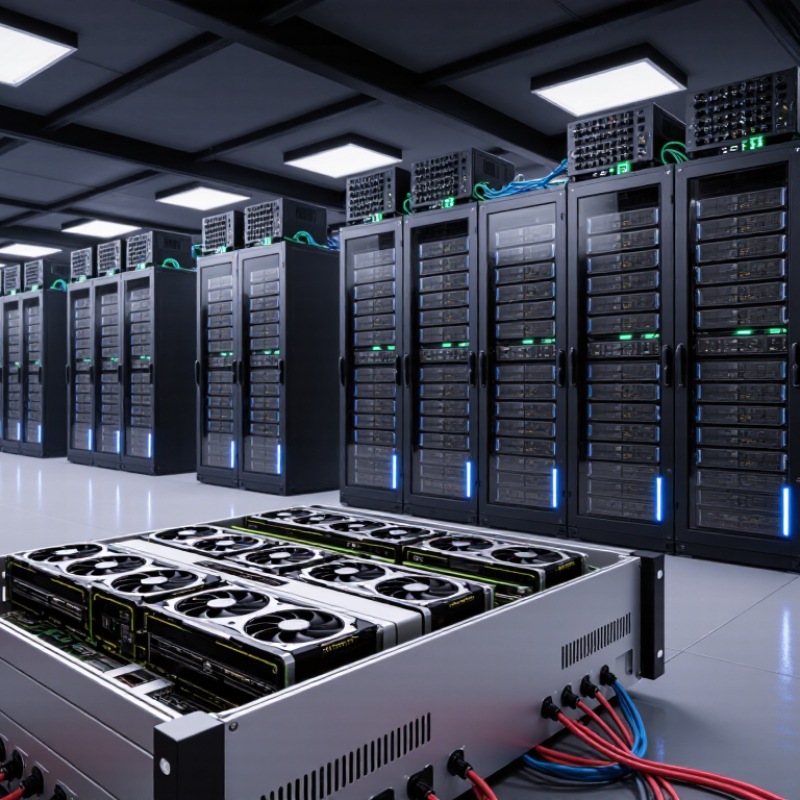
How to Choose a Machine Learning Server Manufacturer

Define Machine Learning Server Requirements and Workloads

Choosing a machine learning server starts with workload evidence, not attractive specifications.
Record model types, dataset sizes, framework versions, and expected users. A vision model may need fast parallel processing. A language model may demand large memory capacity. Training and inference behave differently. Measure both.

Run a small benchmark using representative data. Time one training epoch, batch completion, validation, and model loading. Watch accelerator utilization, CPU wait time, memory pressure, storage latency, and network traffic. Capture peak power and temperature too. These details reveal bottlenecks that product sheets often hide. Define acceptable latency, throughput, uptime, and future expansion before contacting a manufacturer.

Translate measurements into practical server requirements. Specify memory capacity, processor performance, accelerator quantity, storage speed, network bandwidth, cooling, and service access. Leave headroom.

My first estimate was too optimistic because we overlooked data preprocessing. The server appeared powerful, yet the CPU remained busy while the accelerator waited. That mistake changed our evaluation method.

Ask manufacturers to reproduce your benchmark, not a simplified demonstration. Request clear test conditions, replacement procedures, upgrade options, and warranty response times. Reliable decisions depend on comparable evidence, although perfect predictions are rarely possible. Recheck requirements after deployment, because real workloads often shift within weeks.

Compare Processor, GPU, Memory, and Storage Specifications

How to Choose a Machine Learning Server Manufacturer

Processor, GPU, Memory, and Storage Specifications

Choosing a machine learning server manufacturer starts with matching hardware to your actual workloads. Training large models requires strong parallel processing, while data preparation often depends on fast processors. Compare core counts, clock speeds, cache capacity, and instruction support. More cores do not always mean better performance.

GPU specifications deserve careful attention. Check memory capacity, memory bandwidth, supported precision formats, and the number of expansion slots. A powerful GPU can remain underused if the processor, cooling system, or data pipeline is too slow. I once selected a server with excellent GPU performance, but its limited memory caused frequent workload interruptions. That mistake changed my evaluation process.

Memory capacity affects batch size and multitasking. For production systems, error-correcting memory improves reliability and supports longer operating periods. Storage should include fast solid-state drives for active datasets and sufficient capacity for checkpoints. Review read and write endurance, interface speed, drive replacement options, and expansion paths. Small details matter.

Tips: Request benchmark results using datasets similar to yours. Ask how performance changes when all GPUs operate together. Check power requirements, thermal controls, warranty coverage, and technical support response times. Leave expansion space for memory, GPUs, and storage. Do not trust specifications alone. Test the complete configuration when possible. Even experienced teams can underestimate cooling, noise, and future data growth.

Evaluate Scalability, Networking, and System Compatibility

Choosing a machine learning server manufacturer requires more than comparing GPU counts. Scalability must cover power, cooling, storage, and future accelerator upgrades. Stanford’s 2024 AI Index Report estimated GPT-4’s training cost at about $78 million, showing how quickly infrastructure decisions become financial risks. Select systems with modular GPU trays, redundant power supplies, and clear thermal limits. A server that performs well today may become restrictive after one model cycle.

Networking deserves equal attention. Large training jobs repeatedly move data between accelerators, storage, and worker nodes. Check bandwidth, latency, topology, and support for RDMA or comparable low-overhead communication. PCIe generation and lane allocation also matter. A fast network cannot compensate for poor internal bus design. System compatibility is less visible, but more dangerous. Confirm operating-system support, driver maturity, container compatibility, firmware controls, and integration with existing schedulers. The MLPerf Training benchmark results show how strongly software and interconnect choices influence measured performance, not just processor specifications.

Tips: Request a workload-based demonstration using your own dataset size and framework. Ask for measured power draw, network throughput, and recovery time. Avoid accepting peak benchmark figures without test conditions. I have seen impressive specifications fail under mixed workloads. That is uncomfortable, but useful. Leave expansion space in racks, power budgets, and licenses. Also verify replacement procedures and technical support before signing; a delayed component can idle an entire cluster.

How to Choose a Machine Learning Server Manufacturer

Compare representative server platform capabilities across scalability, networking, and system compatibility. Higher values indicate greater expansion potential or broader support.

Evaluation guide: Dual- and four-socket platforms generally provide more memory and accelerator expansion, while 100–200 Gb/s networking is better suited to distributed machine learning workloads. Compatibility scores reflect support for common Linux distributions, Windows Server, virtualization, PCIe accelerators, and standard storage interfaces.

Assess Manufacturer Reliability, Support, Security, and Warranty

Choosing a machine learning server manufacturer requires more than comparing processor counts and advertised training speed. In practical deployments, reliability appears in small details: stable firmware, validated cooling, consistent component sourcing, and clear failure records. Ask for uptime evidence from systems similar to yours. Request maintenance logs, not polished promises. I once overlooked a vendor’s slow replacement process because the benchmark looked excellent. That mistake delayed a research project for nearly a week.

Support should be measurable before purchase. Check whether engineers respond around the clock, understand accelerators, and diagnose driver, network, and thermal faults. Ask for escalation times and remote troubleshooting procedures. A useful support team provides firmware guidance, spare-part planning, and a named technical contact. Test them with a realistic question before signing. Their response may reveal more than a sales presentation.

Still, response speed is not everything. Clear documentation matters when teams work across time zones.

Security deserves equal scrutiny. Confirm secure boot options, firmware signing, access controls, vulnerability notifications, and data-erasure procedures for returned drives. Review how diagnostic logs are protected, since they may expose project details. Warranty terms should specify coverage, response windows, shipping responsibility, and replacement conditions. Read exclusions carefully. “Three-year coverage” may exclude labor or accidental thermal damage. No checklist is perfect. Reassess the manufacturer after deployment through service reviews, incident reports, and repair times. A reliable partner accepts difficult questions and records what went wrong. That honesty is valuable.

Compare Total Cost, Customization Options, and Delivery Services

How to Choose a Machine Learning Server Manufacturer

A machine learning server should be judged by total cost, not purchase price alone. Include electricity, cooling, rack space, maintenance, and software support. A server drawing 3,000 watts can raise monthly operating costs quickly. Ask for a five-year cost estimate with realistic workload assumptions. Also check warranty terms, spare-part availability, and repair response times. A cheaper system may become expensive after one failed accelerator.

Customization matters when workloads change. Confirm support for your preferred GPUs, memory capacity, storage layout, and high-speed networking. Request airflow details and thermal testing for your exact configuration. Experienced manufacturers should explain performance limits without hiding trade-offs. I once saw a team order maximum memory but ignore storage speed. Their training jobs still waited on data. That mistake was avoidable, but specifications can be misleading.

Tips: Request a written quote, delivery schedule, burn-in report, and acceptance test. Ask whether the manufacturer provides remote installation and on-site service. Check how replacement parts are shipped during weekends. Delivery is more than a truck arrival. Secure packaging, customs preparation, rack guidance, and configuration support can prevent costly delays. Leave room for uncertainty. Forecasts change, and your first configuration may not be perfect. A flexible upgrade path is often worth more than a small initial discount.

How to Choose a Machine Learning Server Manufacturer - Compare Total Cost, Customization Options, and Delivery Services

Evaluation Dimension What to Compare Standard Platform Configurable Platform Fully Custom System Evidence to Request
Initial Hardware Cost Server chassis, processors, memory, accelerators, storage, networking, power supplies, and operating-system licensing. Usually the lowest price because the design is prevalidated and produced in volume. Moderate price; cost changes with accelerator type, memory capacity, storage, and network interfaces. Highest price because engineering, validation, and low-volume configuration work are included. Itemized quotation showing every component, license, engineering fee, and excluded item.
Three-Year Total Cost of Ownership Purchase price + power + cooling + support + software + integration + shipping + expected downtime cost. Best fit when workload requirements are stable and standard components are sufficient. Often balances acquisition cost and performance for mixed or changing workloads. Can be economical for specialized workloads if higher utilization offsets engineering cost. Three-year TCO model using the same workload, electricity rate, utilization, and support assumptions.
Power Consumption Rated system power, accelerator power, power-supply efficiency, and measured workload power. Lower configuration risk; verify the supplier’s measured power rather than relying only on the maximum rating. Power varies significantly with the selected accelerators and memory configuration. Can be optimized for a target power envelope, rack density, or data-center limit. Idle, typical-load, and maximum-load measurements; input voltage; cooling requirements; and power-capping options.
Performance per Dollar Training throughput, inference throughput, latency, memory capacity, and performance per watt for the target model. Strong choice when the software stack supports the standard configuration without modification. Allows better alignment between hardware resources and the actual model size or batch workload. May deliver the best workload-specific result, but requires representative testing before purchase. Benchmark results using the customer’s model, precision mode, batch size, dataset scale, and software versions.
Customization Options CPU type, accelerator count, memory capacity, local storage, network adapters, rack form factor, and firmware settings. Limited Predefined configurations with minor component substitutions. Moderate Selectable components within a validated platform. Extensive System architecture can be designed around workload and facility constraints. Configuration matrix, compatibility list, maximum supported capacity, and change-control process.
Expansion and Upgradeability Available accelerator slots, memory slots, storage bays, PCIe capacity, network bandwidth, and power headroom. Usually predictable, but expansion is limited to the published platform design. Provides a practical upgrade path when unused slots and power capacity are reserved. Can be designed for future expansion, although proprietary layouts may increase replacement costs. Motherboard layout, slot allocation, supported upgrade combinations, and spare-power capacity.
Lead Time Time from purchase-order acceptance to shipment of the complete, tested system. Typically the shortest because inventory or repeatable production may be available. Usually longer because components must be allocated and assembled to order. Longest and most variable because design approval, prototyping, and validation may be required. Written production schedule with component-availability assumptions and milestone dates.
Delivery Service Packaging, freight method, export documentation, customs responsibility, insurance, installation, and site acceptance. Commonly shipped as a tested, rack-ready unit with standard documentation. May include pre-installation configuration and burn-in testing by request. Often includes project management, on-site commissioning, and integration support. Incoterm, delivery location, insurance coverage, packaging standard, acceptance criteria, and installation scope.
Validation and Burn-In Component testing, memory testing, accelerator diagnostics, thermal testing, storage checks, and workload validation. Repeatable factory test procedure is normally available. Requires confirmation that the exact customer configuration will be tested. Should include a documented acceptance test because the design is less standardized. Factory-test report, burn-in duration, diagnostic tools, failure criteria, and acceptance-test procedure.
Warranty and Repair Warranty duration, response time, replacement-part availability, return process, and on-site service coverage. Often easier to repair because replacement parts and service procedures are standardized. Confirm coverage for all selected components and firmware combinations. Negotiate long-term parts availability and service for custom components. Warranty terms, service-level agreement, escalation path, spare-parts policy, and repair location.
Software and Firmware Support Driver compatibility, operating-system support, firmware updates, monitoring tools, and container or orchestration support. Usually has the clearest compatibility documentation. Requires validation of the exact component combination and software versions. May require additional integration work and a longer maintenance commitment. Supported software matrix, update policy, security-advisory process, and configuration-management records.
Integration Services Rack installation, network configuration, identity integration, storage integration, cluster setup, and operational handover. Basic configuration is usually sufficient for a standalone server. Useful when the server must connect to existing storage, scheduling, or monitoring systems. Recommended for multi-node clusters, specialized networking, or strict facility requirements. Statement of work, labor rates, remote or on-site coverage, documentation deliverables, and acceptance criteria.
Shipping and Import Cost Freight, insurance, duties, taxes, brokerage, special handling, and destination delivery. Lower handling complexity when the system is shipped in a standard configuration. Confirm whether partial shipments are allowed and how missing components affect acceptance. Custom packaging and special handling may add cost and time. Delivered-cost quotation with currency, tax treatment, customs responsibility, and delivery term clearly stated.
Supplier Qualification Manufacturing capability, quality controls, traceability, information security, financial stability, and references for similar workloads. Evaluate production consistency and component traceability. Evaluate configuration control and the ability to reproduce the approved build. Evaluate engineering resources, design ownership, and long-term support capability. Quality certificates, audit results, sample test records, change-notification policy, and relevant project references.
Best-Fit Decision Rule Choose the option that meets performance, reliability, delivery, and support requirements at the lowest risk-adjusted TCO. Best for predictable workloads, short deployment schedules, and limited customization. Best for organizations needing flexibility without assuming full design responsibility. Best for unusual workloads, strict power or space limits, and large-scale deployments that justify engineering effort. Use a weighted scorecard and require a proof-of-concept or benchmark before final approval.

Comparison note: All cost and delivery comparisons should use the same workload, quantity, destination, warranty period, electricity rate, utilization level, and service scope. Supplier quotations, benchmark results, and delivery dates should be confirmed in writing before purchase.

FAQS

What should I assess before choosing a machine learning server?

Record model types, dataset sizes, framework versions, and expected users. Training and inference need different resources. Measure both.

How can I test a server realistically?

Run a small benchmark with representative data. Time one training epoch, batch completion, validation, and model loading.

Which performance signals matter during testing?

Monitor accelerator use, CPU waiting, memory pressure, storage latency, network traffic, power, and temperature. Product sheets may hide bottlenecks.

How do processors and accelerators affect performance?

Training often needs parallel processing. Data preparation may depend more on processor speed. More cores do not always improve results.

What accelerator specifications should I compare?

Check memory capacity, bandwidth, supported precision formats, expansion slots, cooling, and performance with all accelerators active.

How much memory and storage does a server need?

Memory affects batch size and multitasking. Use reliable memory for long operation. Fast solid-state storage should hold active datasets and checkpoints.

Why are networking and internal connections important?

Training moves data repeatedly between accelerators, storage, and worker nodes. Check bandwidth, latency, topology, internal bus design, and low-overhead communication support.

How should I evaluate scalability and future expansion?

Leave room for additional memory, accelerators, storage, rack power, cooling, and software licenses. A strong server today may become restrictive later.

What evidence should a manufacturer provide?

Request tests using similar datasets and frameworks. Ask for power draw, network throughput, recovery time, replacement procedures, and support response times.

What mistake can happen during server selection?

I once focused on accelerator performance and overlooked preprocessing. The processor stayed busy while the accelerator waited. That estimate was too optimistic.

Conclusion

Choosing the right machine learning server manufacturer starts with clearly defining your workloads, including model size, training frequency, inference demands, and expected user volume. These requirements will guide decisions about processors, GPUs, memory capacity, storage speed, and data protection. It is also important to evaluate scalability, networking performance, cooling design, operating system support, and compatibility with your existing software and infrastructure. A well-matched server should support current projects while leaving room for future expansion.

Beyond technical specifications, assess the manufacturer’s reliability, product quality, technical support, security practices, and warranty coverage. Transparent service policies and responsive assistance can reduce downtime and simplify maintenance. Finally, compare the total cost of ownership, including energy use, upgrades, maintenance, and delivery. Customization options may help you avoid paying for unnecessary components while ensuring the system meets precise performance needs. A careful comparison of these factors will help you select a dependable, secure, and cost-effective solution for machine learning development and deployment.

Liam

Liam

Liam is a dedicated marketing professional with a profound expertise in the industry, where he excels at highlighting the unique advantages of our core products. With a keen understanding of market trends and consumer needs, Liam frequently updates our company’s professional blog, providing......