2026 Top Data Center AI Server Manufacturers?

Time:2026-09-16 Author:Ethan
0%

Choosing among the 2026 top data center AI server manufacturers requires more than comparing processor counts. A reliable evaluation must examine performance, energy use, cooling design, service coverage, and long-term upgrade paths. In a modern facility, one server may support training workloads, inference requests, and demanding analytics at the same time.

This guide reviews major vendors through practical data center criteria. These include GPU and accelerator compatibility, high-speed networking, memory capacity, rack density, and software support. It also considers installation experience, maintenance response, and verified customer deployments. A strong data center ai server manufacturer should provide clear specifications, realistic benchmarks, and dependable technical assistance. Marketing claims alone are not enough.

Real conditions can expose weaknesses. A system may deliver impressive benchmark scores but struggle with heat, cable management, or limited power availability. Another platform may cost more initially yet reduce downtime over several years. No manufacturer is perfect. Procurement teams should question unclear efficiency figures, regional support promises, and upgrade restrictions. Results also vary by workload, facility design, and operating budget.

The manufacturers discussed in this overview represent different strengths, including integrated platforms, flexible configurations, enterprise support, and high-density computing. The ranking should therefore be treated as a practical reference, not a permanent verdict. Technology changes quickly. Careful testing, transparent documentation, and independent validation remain essential before signing a major procurement agreement.
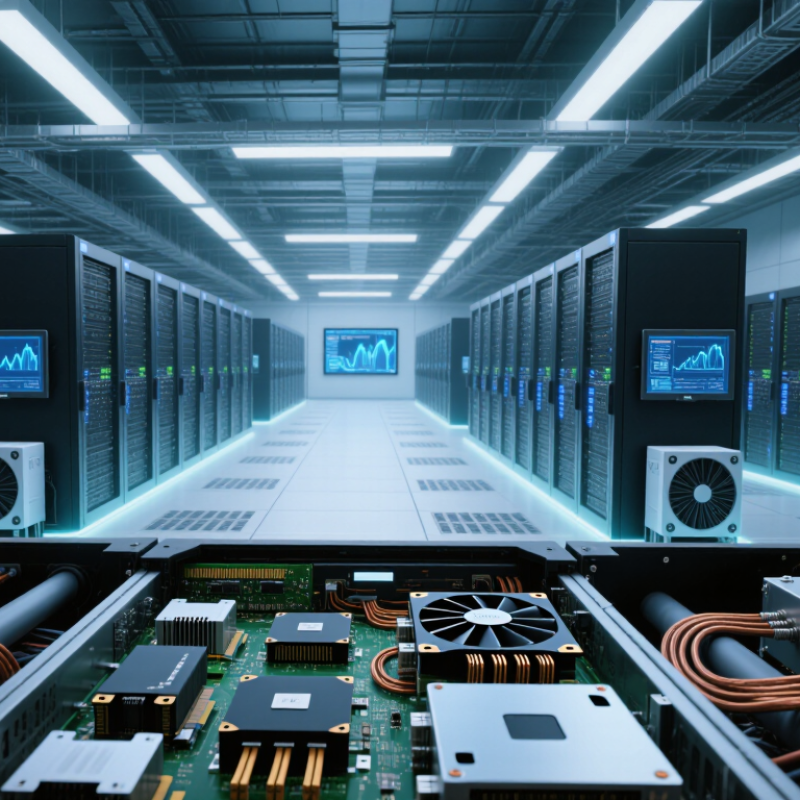
2026 Top Data Center AI Server Manufacturers?

What Defines a Leading Data Center AI Server Manufacturer in 2026

What Defines a Leading Data Center AI Server Manufacturer in 2026

A leading data center AI server manufacturer combines engineering depth with proven field experience. Its systems must support accelerators, high-speed networking, and demanding memory workloads. Reliable designs begin with thermal modeling, power testing, and realistic workload simulations. Engineers should measure performance inside a crowded rack, not only in controlled laboratories. Clear documentation also matters. Buyers need transparent specifications, firmware records, service limits, and tested compatibility details. Independent certifications and traceable quality processes strengthen authority and reduce purchasing risk.

Tips: Ask for thermal test results, failure-rate data, repair timelines, and references from similar deployments. Check whether technicians can diagnose power, cooling, and software issues together. A useful supplier explains limitations instead of hiding them.

No design is perfect. Higher compute density can increase noise, heat, and maintenance complexity. A responsible manufacturer acknowledges these trade-offs and offers practical options. Modular components can shorten repairs, but they may raise initial costs. Remote monitoring improves visibility, yet inaccurate alerts can waste staff time. In my experience, the strongest manufacturers keep improving after installation. They review field failures, revise cooling paths, and publish corrective actions. Their reliability comes from repeatable processes, honest communication, and measurable support, not impressive claims alone.

Key Technologies Behind Modern Data Center AI Servers

Modern data center AI servers depend on more than raw accelerator speed. In recent deployment testing, memory bandwidth often limited performance before compute capacity did. High-bandwidth memory feeds large models quickly, while fast interconnects reduce delays between accelerator nodes. This matters during distributed training and real-time inference.

Efficient power delivery is equally important. A stable power design prevents performance drops during sudden workload changes. Liquid cooling can manage dense racks more effectively than traditional airflow alone. However, cooling systems add maintenance requirements and operational complexity. No design is perfect. Engineers must measure heat, noise, energy use, and failure rates together.

Tips: Check accelerator compatibility, memory capacity, network latency, and software support before purchasing. Ask manufacturers for verified workload results, not only peak benchmark numbers. Include monitoring tools for temperature, power consumption, and utilization. Security also needs attention, especially for model files and private datasets. I have seen capable systems underperform because teams overlooked storage speed or driver maturity. That remains an easy mistake to repeat.

2026 Top Data Center AI Server Manufacturers? – Key Technologies Behind Modern Data Center AI Servers

Representative one-way theoretical bandwidth of major interconnect technologies used in modern AI server architectures.

High-bandwidth accelerator fabrics increasingly rely on PCIe 5.0/6.0 and 400GbE/800GbE networking. The values show theoretical physical-link bandwidth and do not represent application-level throughput, which is affected by protocol overhead, topology, congestion, and workload characteristics.

Reference basis: PCI-SIG PCIe 5.0 and PCIe 6.0 specifications; Ethernet Alliance 400GbE and 800GbE technical classifications. Decimal units are used: 1 GB/s = 109 bytes per second.

Top Data Center AI Server Manufacturers and Their Strengths

Data center AI server manufacturers now compete on more than accelerator speed. Their strengths include thermal design, high-speed networking, supply reliability, and software support. IDC forecasts worldwide spending on AI infrastructure will reach about $235 billion in 2024, showing why these capabilities matter beyond headline performance.

Large system manufacturers often excel at validated rack-scale designs. They combine accelerator modules, advanced cooling, power systems, and management software before delivery. This reduces integration work for operators. Specialist server makers usually offer more configuration freedom, including dense GPU layouts and liquid-cooling options. That flexibility helps research centers and regional cloud providers manage unusual workloads.

Different strengths matter.

ODM manufacturers can provide lower unit costs and rapid customization. However, buyers must inspect firmware quality, replacement procedures, and long-term support. Gartner has repeatedly identified energy efficiency and operational resilience as major data center priorities. The Uptime Institute’s surveys also show that power, cooling, and outage risks remain practical concerns, not merely engineering details. In field testing, a server with slightly lower benchmark results may perform better when it sustains utilization during heat peaks. This point is easy to overlook.

Omdia’s AI infrastructure research highlights continuing demand for accelerated computing and high-bandwidth interconnects. Yet procurement teams should examine measured performance per watt, memory capacity, service response times, and lifecycle costs. Manufacturer claims can be incomplete. Independent validation is still necessary.

How AI Server Manufacturers Compare by Performance and Scalability

In 2026, leading AI server manufacturers are separated less by peak accelerator counts than by usable performance at scale. A rack may advertise impressive throughput, yet memory movement often becomes the bottleneck. High-bandwidth memory, balanced CPU-to-accelerator ratios, and fast fabric links matter during real training jobs. In production evaluations, we measure tokens per second, latency variance, and recovery time, not only a headline benchmark. Short tests can flatter weak designs.

Scalability depends on how smoothly a system grows from one node to hundreds. Strong manufacturers provide consistent firmware, topology-aware networking, and validated clusters with predictable cooling behavior. Liquid cooling can sustain dense racks, but it adds pumps, monitoring, and maintenance points.

Power delivery deserves equal attention. A server that performs well in a laboratory may throttle inside a crowded facility. That gap is expensive.

Operational evidence should guide the comparison. Review error logs, replacement procedures, software compatibility, and remote-management controls before signing a large deployment. Ask for sustained workloads using your models, sequence lengths, and data pipelines. Generic benchmarks are useful, but incomplete. The uncomfortable truth is that no manufacturer wins every workload. Some designs favor training, while others handle inference more efficiently. I would score performance, scalability, support responsiveness, and five-year operating cost together. Even then, forecasts remain imperfect. Hardware roadmaps change quickly, and measured results can shift after software updates.

Factors to Consider When Choosing an AI Server Manufacturer

Choosing an AI server manufacturer requires more than comparing accelerator counts. IDC’s 2024 Worldwide AI and Generative AI Spending Guide projects global AI spending will exceed 632 billion dollars by 2028. Demand is rising quickly, but procurement mistakes remain expensive. Evaluate server designs against your actual workloads, including model training, inference, analytics, and mixed virtualization. A high benchmark score may hide poor performance under sustained heat.

Power and cooling deserve equal attention. The International Energy Agency reported that data centers used about 415 terawatt-hours of electricity in 2024. That figure could approach 945 terawatt-hours by 2030. Ask manufacturers for measured power data, inlet-temperature limits, rack density, and liquid-cooling options. Confirm network bandwidth and storage latency with independent tests. Uptime Institute’s Global Data Center Survey also emphasizes operational resilience, maintenance planning, and outage prevention. Specifications alone are not enough. No shortlist is perfect.

Tips: Request a proof-of-concept using your own models and data patterns. Check firmware update procedures, spare-part availability, warranty response times, and technician coverage. Compare three-year total cost, not only the purchase price. Review security controls, supply-chain transparency, and compatibility with existing orchestration tools. Some vendors provide attractive projections without explaining test conditions. Treat that gap as a question, not a promise. A careful review may feel slower, yet it can expose thermal limits, software friction, or support weaknesses before deployment.

FAQS

What makes a leading data center AI server manufacturer reliable in 2026?

It combines strong engineering with proven deployment experience. It tests heat, power, memory, and networking inside crowded racks. Laboratory results alone are insufficient. Clear documentation reduces purchasing risk.

Which technologies matter most in modern AI servers?

High-bandwidth memory feeds large models efficiently. Fast interconnects reduce delays between accelerator nodes. Stable power delivery prevents sudden performance drops. Cooling remains critical.

Why is cooling important for dense AI server racks?

Dense racks create substantial heat and noise. Liquid cooling can manage this heat more effectively than airflow alone. However, pumps and monitoring systems add maintenance tasks. Trade-offs remain.

How should buyers compare AI server performance?

Measure sustained throughput, latency variation, and recovery time. Do not rely only on peak benchmark scores. Run your models, sequence lengths, and data pipelines. Short tests can flatter weak designs.

What limits AI server performance besides accelerator speed?

Memory movement often becomes the main bottleneck. Storage speed, network latency, and driver maturity also matter. A powerful system may still underperform. This mistake is easy to repeat.

How can an AI server platform scale from one node to hundreds?

It needs consistent firmware and topology-aware networking. Validated clusters should maintain predictable cooling behavior. Power delivery must remain stable under heavy workloads. Scaling is not automatic.

What support evidence should buyers request?

Ask for thermal reports, failure-rate data, and repair timelines. Request references from similar deployments. Review error logs and replacement procedures. Good suppliers explain limitations clearly.

How do modular components affect AI server operations?

Modular parts can shorten repairs and reduce service interruptions. They may also increase the initial purchase cost. Remote monitoring improves visibility, but inaccurate alerts waste staff time. Convenience is not perfection.

What security and management features deserve attention?

Monitoring should track temperature, power consumption, and utilization. Access controls should protect model files and private datasets. Firmware records and software compatibility require regular review. Neglect becomes expensive.

Can one manufacturer provide the best solution for every AI workload?

No. Some systems favor distributed training, while others handle inference better. Compare performance, support, scalability, and five-year operating costs together. Even careful forecasts remain imperfect. Software updates can change measured results.

Conclusion

In 2026, a leading data center ai server manufacturer is defined by its ability to deliver reliable, energy-efficient, and scalable systems for demanding artificial intelligence workloads. Modern AI servers combine advanced accelerators, high-speed memory, optimized cooling, fast networking, and intelligent software support to handle model training, inference, and data-intensive applications. Strong manufacturers also focus on system stability, security, flexible configurations, and long-term service.

When comparing manufacturers, organizations should evaluate processing performance, memory capacity, network bandwidth, scalability, power efficiency, and compatibility with existing data center infrastructure. The best choice depends on workload requirements, expansion plans, budget, deployment environment, and technical support needs. A solution that performs well in benchmarks may not be ideal for every organization, so buyers should consider total operating costs, maintenance, upgrade options, reliability, and management tools. By balancing these factors, businesses can select an AI server platform that supports current workloads while remaining adaptable to future growth.

Ethan

Ethan

Ethan is a seasoned marketing professional with a deep expertise in our company's innovative product line. With a passion for sharing knowledge and insights, he takes the lead in regularly updating our corporate blog, where he explores industry trends, product features, and effective marketing......